
Pre-Game Routines for Neurodivergent and ADHD Athletes: A Practical Guide for Parents
Many neurodivergent young people find the lead-up to games or competitions unpredictable and overwhelming. Changes in environment, sensory input, and expectations can make it harder for them to regulate emotions and stay focused once the game begins. This can make it harder to regulate emotions, focus during play or competition, and cope with mistakes or frustration.
Consistent routines can create familiarity and structure that support both sport performance and emotional regulation. The goal is not to control everything, but to focus on the controllables to make the experience more predictable and supportive for the athlete’s brain and body.
Pre-performance routines are often a staple tool encouraged when working with sport psychologists and sport mental health professionals when supporting young athletes.
Hi, I’m Emma, an accredited social worker who supports young athletes through both learned and lived experience. This guide will cover what to try, what to ask, and when to refer to a professional.

Why Routines Help Neurodivergent and ADHD Athletes
Predictability supports emotional regulation
Reduces uncertainty before competitions
Helps athletes mentally transition into “sport mode”
Can reduce overwhelm caused by sensory or environmental changes
Supports confidence and focus during competition
Start by Building the Routine With Your Child
To start, the most helpful routines are usually created with your young person. So, take a moment to sit down with your young person, and consider some of the following points:
Start with what you already know about them:
What are their interests? When do they feel the best?
Are there any sensory preferences to consider within their sport? Consider the things they see, hear, feel, touch, smell, or taste, whether before the game or during.
How do they feel in social situations? Do they need alone time, or do they find moments to themselves before the game or when competing?
Do they have a preference for predictability or are they excited by the uncertainty of a game or competition?
Questions you can ask as a parent:
What do you like about your sport?
What helps you feel calm before games?
What makes you feel excited?
What makes game days harder?
What might help you feel more prepared?
Is there anything we do now before game day that you enjoy?
Creating a Consistent Pre-Game Timeline
Having the same sequence of steps before competitions can reduce uncertainty, help an athlete stay emotionally regulated when things come up during the game or competition, and help the body transition into “sport mode.”
This could look like:
Eat a familiar pre-game/competition snack.
Choose a favourite food or “safe food” that supports game/competition day energy needs.
Pack the game/competition-day gear together; consider sensory preferences when choosing clothes, if they have control over that.
Listen to music before the event.
Headphones or listening to music in the car together on the way to the event.
Create a playlist for before games/competitions.
Arrive at the same time before events.
Use any breathing exercises that your young person enjoys.
See breathing exercises below!
Are there any power phrases they like? What is something positive they can repeat to themselves as they get started? Ex. “I’m strong”, “I’m prepared”.
Have a plan for if they’re feeling overwhelmed, frustrated, or spiralling.
Example: If I’m feeling overwhelmed, find myself crying, or I can’t bring my focus back, I’ll go back to the bench and take deep breaths.
Can the coach be included in this plan in case he needs a reminder when he’s out there?
Even just using small repeated steps can signal to the brain and body that it’s time to transition into competition.

Helping Your Athlete Create a Simple Game Plan
Before the game:
Check in about why they enjoy the sport.
Identify what they want to focus on that day.
Discuss what they can do if they start feeling overwhelmed, frustrated, or start mentally spiralling.
An example regulation plan for during a game or moment at a competition:
Return to the bench or step away from what you’re doing (When possible)
Use a breathing exercise they enjoy and have practiced before
Reset before returning to play
*Note: Coaches are great people to be included in this plan if reminders are needed.
Breathing Strategies for Regulation
Here are a few different breathing exercises you can try with your athlete. These are strategies that we want them to be able to pick up easily or remember when feeling overwhelmed or to increase focus and awareness:
*Note: Practising these strategies outside competition makes them easier to use during games.
Using a Visual Routine or Checklist
Many young neurodivergent athletes benefit from visual structure.
Turning the routine into a visual one or a checklist can help your young person develop some autonomy over their routine and also lead to less overwhelm when it comes time to use it.
Example checklist:
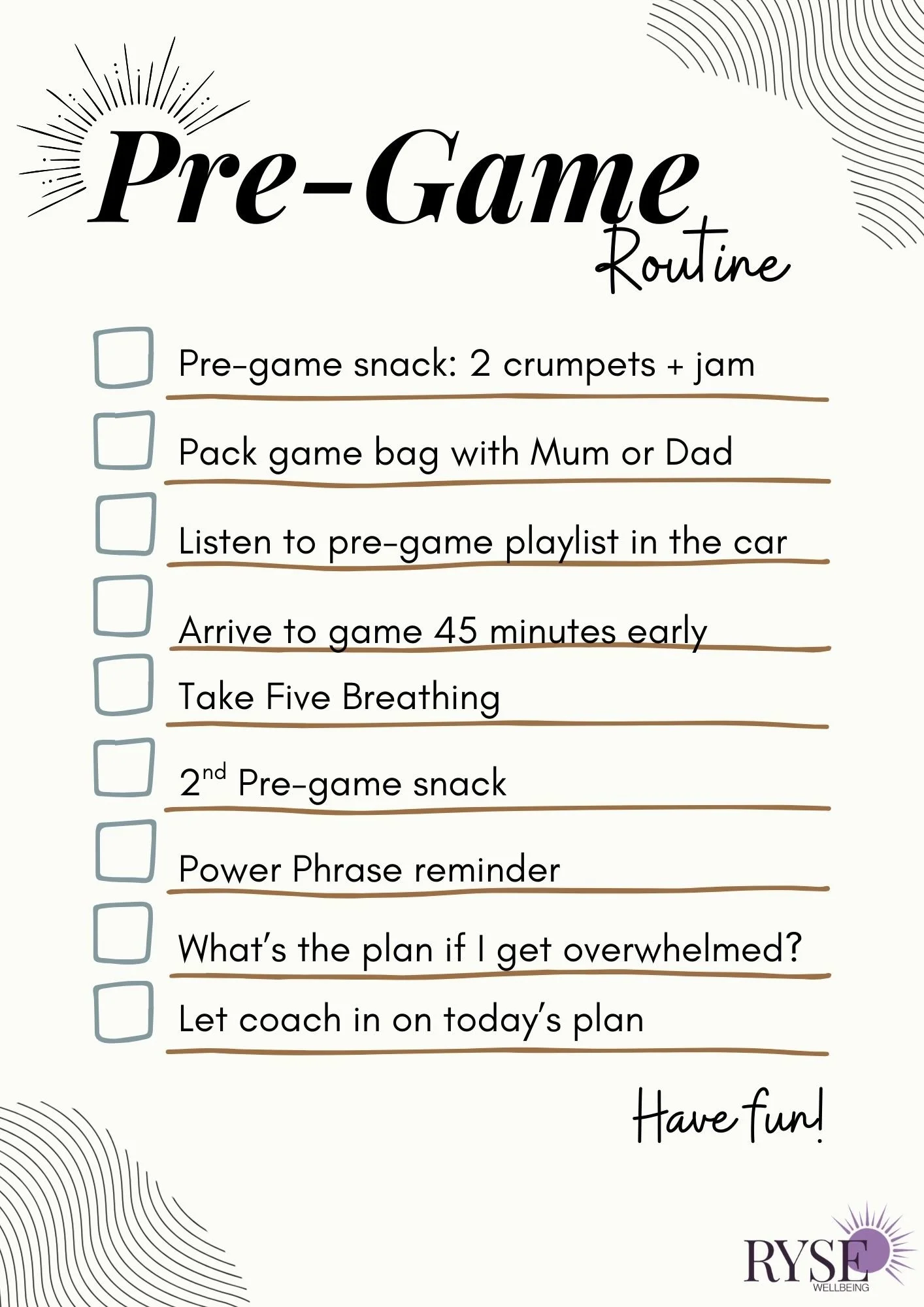
The benefits of a visual routine or checklist:
Reduces decision-making, leading to fewer steps in the process overall = less overwhelm.
Makes the process clearer and more predictable.
Helps ensure steps aren’t forgotten.
Planning for Sensory Load
Sport environments can be:
Loud
Busy
Unpredictable
Keep in mind any additional strategies that might be helpful or necessary to support your young person's sensory needs:
Arrive slightly earlier than the rest of the team/group.
Find a quiet space before games.
Bring headphones to use pre-game/competition or during if that’s possible in their sport.
Bring a comfort item from home if helpful.
We may not always know what a venue is going to be like or how it might affect your young athlete. But we can do our best to plan because when we plan ahead, we can make the environment easier to manage.
Keeping Expectations Predictable as Parents
As parents, you may not have very much control over what happens on the field, at the venue, or how others act. But one thing you have complete control over is the messaging you offer your young neurodivergent athlete. Consistent messages before games can help athletes feel calmer, ease pressure, and feel supported.
Try to focus on effort vs. the outcome.
Examples you can use:
“Focus on effort.”
“Try your best today.”
“Take it one play at a time.”
*Note: Not every athlete is the same; we know that there may be different messages that your young athlete prefers. Check in with them and ask, what do they find most helpful from you before an event?
Extending the Routine to Training Days
The best pre-game or competition routine is practiced. The biggest game of the season is not the time to be trying new routines or strategies. We want to employ these tactics in low-stakes space first, build consistency and comfort, and then apply them to game or competition days.
Support your young athlete to build familiarity, reinforce regulation strategies and trial new and different tools that work for them. When you have a strong plan built around training days, it makes the application to game or competition days that much easier. It will also support making big events feel less different from practice.
*Question: How can you incorporate the plan before training days? Does it look different? Howcome?
How Routines Support Long-Term Sport Performance
When we engage any athlete in pre-performance routines, we’re supporting them to regulate their emotions, improve confidence during games and competition, improve their ability to cope with mistakes or setbacks, and maintain focus. This becomes even more important for ADHD and neurodivergent athletes in a pre-performance routine, we’re supporting their even greater needs for regulation, offering them tools to reign in their brain if needed, and allowing them to feel more in control in an environment that can already feel uncontrollable.
When to Seek Additional Support
If you've tried to explore this idea with your young athlete, you’ve developed a routine, but notice they’re still struggling, it doesn’t mean you’ve done anything wrong. It might just be time to consider seeking sport performance support for your ADHD or neurodivergent athlete.
Working with a sport psychologist, sport social worker, or mental health professional experienced in sport performance can help young athletes who are finding it difficult to regulate emotions during games, experiencing performance anxiety, struggling with frustration, withdrawing from sport, or noticing a drop in confidence.
For families looking for support for an ADHD athlete in Melbourne, working with a professional who understands both athlete mental health and sport performancecan make a meaningful difference. At RYSE Wellbeing, we provide sport performance support for young athletes in Melbourne and online, helping athletes build emotional regulation, confidence, and resilience in sport.
Final Thoughts
Remember, it’s not about being the perfect sports parent or knowing exactly what to do. It’s about knowing that small routines can make a big difference for neurodivergent athletes. The goal is to help your young person feel prepared, regulated, and confident. So, start small, adjust over time, and seek support as you or your young person needs.